What Is Essendon Known For?
Essendon is best known for its AFL club, the Essendon Football Club, nicknamed the Bombers, along with its old airport, leafy streets and easy reach to the city. The football club carries most of the name recognition across Australia. The suburb itself is quieter than the headlines suggest. It is a settled residential area on Melbourne's north-western side, and it is worth reading about on its own terms. If you want local news and updates, the Essendon Bulletin is the place to start.
This guide sorts out what people mean when they say the name. Sometimes they mean a team. Sometimes they mean an airfield, a school or a street of big old houses. Each one has a different story.
Why does the football club shape the suburb's reputation?
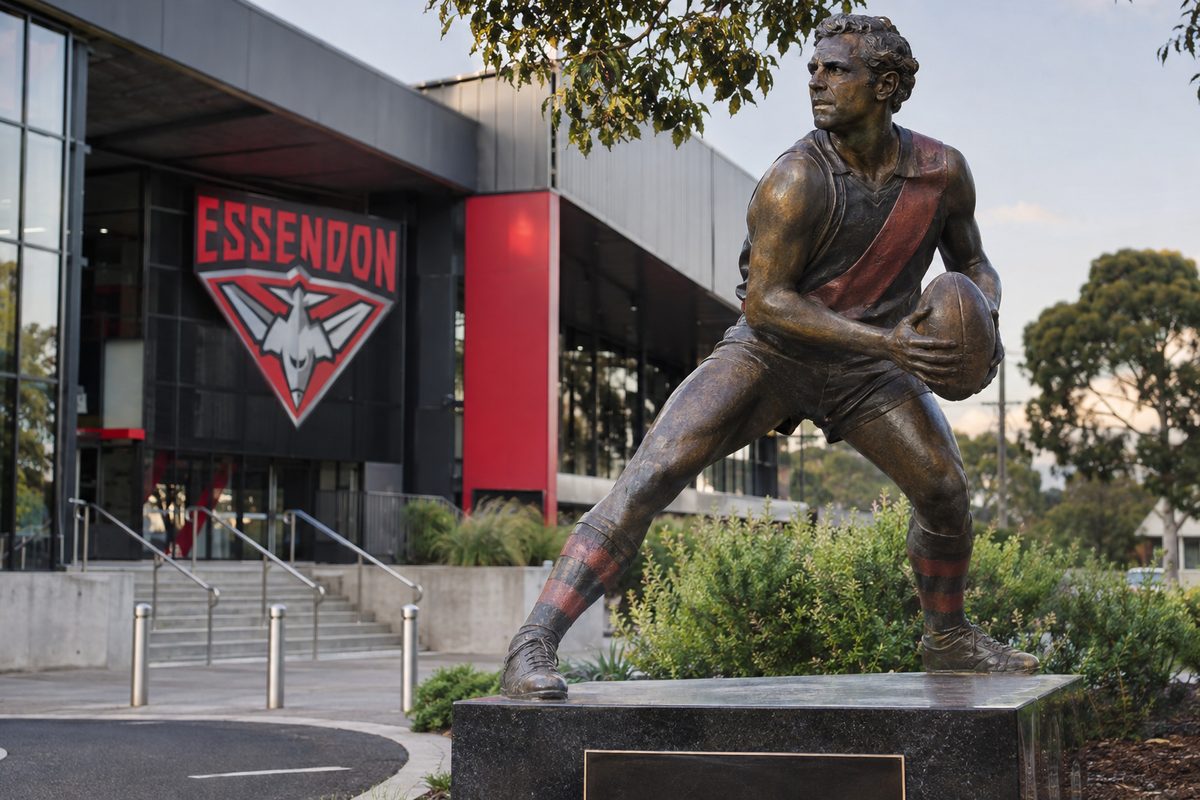
Because most Australians first hear the name on a Saturday afternoon. The Essendon Football Club was founded in 1871 and was one of the founding clubs of the Victorian Football League in 1897. It has won 16 league premierships, a total that sits near the top of the all-time list. The red and black sash is among the most recognisable club uniforms in the country.
The club has deep roots in the area. For decades its home ground was Windy Hill, Essendon, a compact suburban oval where crowds stood close to the boundary line. Fans still talk about it as a place where the game felt local. The club left Windy Hill as a match venue in the 1990s and now plays its home fixtures at Docklands Stadium and the MCG, both near the Melbourne central business district. Windy Hill still matters to the club's identity, and the oval remains a community sports ground.
Here is the key point most visitors miss. The team no longer plays in the suburb, yet the suburb keeps the name. Walk around and you will see red and black scarves in shop windows and kids in club jumpers at the local park. The connection is real, but it now runs through memory and loyalty more than geography.
What was the supplements saga, and why does it still come up?
It is the most discussed controversy in the club's history. In 2013 an investigation began into a supplements program run at the club during the 2012 season. The Essendon Football Club supplements saga dragged on for years. The club was fined and excluded from the 2013 finals series, and senior coach James Hird was suspended. In 2016 the Court of Arbitration for Sport banned 34 current and former players for two years, which meant that the 2016 season was missed by a large part of the playing list.
Why does it still come up? Because it affected real people over a long time. Players lost a season of their careers. Fans were split between loyalty and frustration. The club also reshaped its operations afterwards. If you meet a long-time supporter, you will likely hear a view on it within minutes.
A fair reading keeps two facts apart. The saga belongs to the football club. It says nothing about daily life in the streets nearby, where most residents have no link to the AFL beyond choosing a team to follow.
Is the airport part of the story too?
Yes, and it is the second thing people tie to the name. Essendon Airport opened in the early 1920s and was Melbourne's main airport until international and domestic traffic moved to Tullamarine in 1970. Today the site operates as Essendon Fields Airport. It handles private flights, charters, freight and training aircraft, and the grounds also contain offices, retail and a large outlet shopping centre.
The football club ties back in here. Its training and administration base, known as The Hangar, sits at Essendon Fields. So the club that left Windy Hill did not go far. It moved to the airport precinct, which makes the suburb's two best-known landmarks neighbours.
Residents notice the airfield in small ways. Light aircraft pass overhead and business jets use the runway. Because the flights are smaller and less frequent than at a major airport, the sound is a background feature for most people rather than a constant intrusion. Our guide on Is Essendon a Good Suburb to Live In? covers noise and flight paths in detail, so there is no need to repeat it here.
What does the suburb look like on the ground?
Essendon, Victoria, is about nine kilometres north-west of the Melbourne central business district. It is also called the Central business district by many locals who simply say "the city". The streets are wide and tree-lined, with Federation and Edwardian homes, art deco blocks and more recent townhouses mixed in. Many of the older houses sit on generous blocks, and that is a large part of why the area has a settled, established feel.
Mount Alexander Road is the main spine for this part of Melbourne. It runs from the city fringe out past Moonee Ponds and carries trams and buses on its route. Shops, cafes and apartment blocks line parts of it, and it links the area to its neighbours. Ascot Vale lies to the south-east, and its Showgrounds precinct is a landmark in its own right.
A quick note on a common search mix-up. People sometimes land on Showgrounds railway station, Perth, when they look up showgrounds and rail links. That station is in Western Australia and has no connection to Essendon. The Melbourne showgrounds sit near Ascot Vale, and that is the one local readers usually mean.
Which parts of the area are people talking about?
The name covers more than one pocket. Essendon North is the suburb to the north, with a more suburban pattern of streets and a slightly different mix of housing. Essendon Fields, the airport precinct, is its own district. Moonee Ponds Creek runs along the eastern side of the wider area and gives walkers and cyclists a path with greenery and open space. Parts of the creek corridor are still being improved, so conditions vary along its length.
All of this sits within the City of Moonee Valley, the local government area that covers Essendon along with Moonee Ponds, Ascot Vale, Avondale Heights and nearby suburbs. The council handles rubbish collection, local parks, planning permits and community facilities. When a resident asks "who fixes this footpath", the answer is usually the council. If you want boundaries and the postcode, our separate explainer on Essendon's boundaries and postcode 3040 sets out the lines more precisely.
Is it known for schools?
For many families, yes. Penleigh and Essendon Grammar School is the best known independent school in the area. It formed from a merger of long-established schools and serves students from early years through to senior secondary. Its presence is one reason families searching for education choices look at this part of Melbourne. There are government and Catholic schools nearby too, and school zones matter a great deal when buying or renting, so check the current zone maps before committing to an address.
Here is a hypothetical to show how this plays out. Imagine a couple with two primary-aged children who currently rent in an inner suburb. They want a larger house with a yard, a short trip to the city and an easy path to a good school. Essendon fits that checklist on paper. Whether it works for them depends on price, the specific street and the school zone. That is a labelled example, not a story about a real family, but it shows why the suburb draws that kind of household.
How does it compare with the football fame?
The AFL name creates an image of a loud, gritty sports suburb. The reality is calmer. Match days happen elsewhere, mostly at Docklands Stadium or the MCG, and fans travel by tram, train or car to reach them. On an ordinary weekend the streets near Windy Hill, Essendon, are mostly people walking dogs, kids on scooters and neighbours chatting over fences.
That gap between reputation and reality is the most useful thing to know. If you are a football fan visiting for the first time, expect a pleasant suburb with a proud history and a few landmarks to look at, not a stadium atmosphere every day. If you are a prospective resident, expect a quiet, established area where the team badge is more a piece of local colour than a way of life.
What do people often get wrong?
Three common assumptions deserve correcting, and each is easy to check.
- The team plays at Windy Hill. It does not. Home matches are at Docklands Stadium and the MCG.
- The airport is the main Melbourne airport. It stopped being that in 1970. Essendon Fields Airport now serves smaller operations.
- The supplements saga defines the suburb. It defines a chapter of the football club's history. The suburb is a separate place with its own routines.
There is another mistake worth naming. Some people treat the suburb as one uniform area. In practice, the streets near Mount Alexander Road feel different from the quieter pockets in Essendon North, and both feel different from the airport precinct. Spend an hour walking each and you will notice it.
How can you see it for yourself?
A simple half-day plan works well. Start at Windy Hill and look at the oval and the surrounding streets. Walk or drive toward Mount Alexander Road for a coffee and a feel for the local shops. Head to Essendon Fields to see the airport precinct and the club's training base from the outside. Finish with a stroll along part of the Moonee Ponds Creek trail. You will cover the football history, the aviation history and the residential character in one trip.
If you are weighing a move, go back on a weekday morning and again on a weekend. Notice traffic, noise, tram frequency and how busy the shops feel. A suburb shows its real character at those ordinary times.
What should you do next?
Pick the reason you are curious and act on it. If it is football, look up the club's history and visit Windy Hill. If it is the airport, read about the activity at Essendon Fields before you plan an outing. If it is living here, spend a full day on foot, check the school zone for the address you like and read the council's planning notes for the street. Then follow the Essendon Bulletin for local news so that your picture stays current rather than relying on old headlines.